


Zero prompt tools are showing up more and more in everyday apps, but what’s really behind them? And how do you build one that works without needing someone to type in detailed instructions every time?
That’s where things get interesting. A lot of companies want to add smart features to their apps, but they don’t want users having to learn prompt writing or talk to a chatbot. They just want their tools to do the job—on their own.
If you’re one of those people thinking, “How do I get from idea to working product without becoming an AI expert?” then you’re asking the right question.
Let’s break down how you can actually make that happen. No fluff. Just practical insight on how a solid AI app development company can help you build tools that think ahead and take action without needing step-by-step instructions.
First, What Are Zero Prompt Autonomous Tools?
Sounds like a buzzword, right? But the concept’s pretty simple.
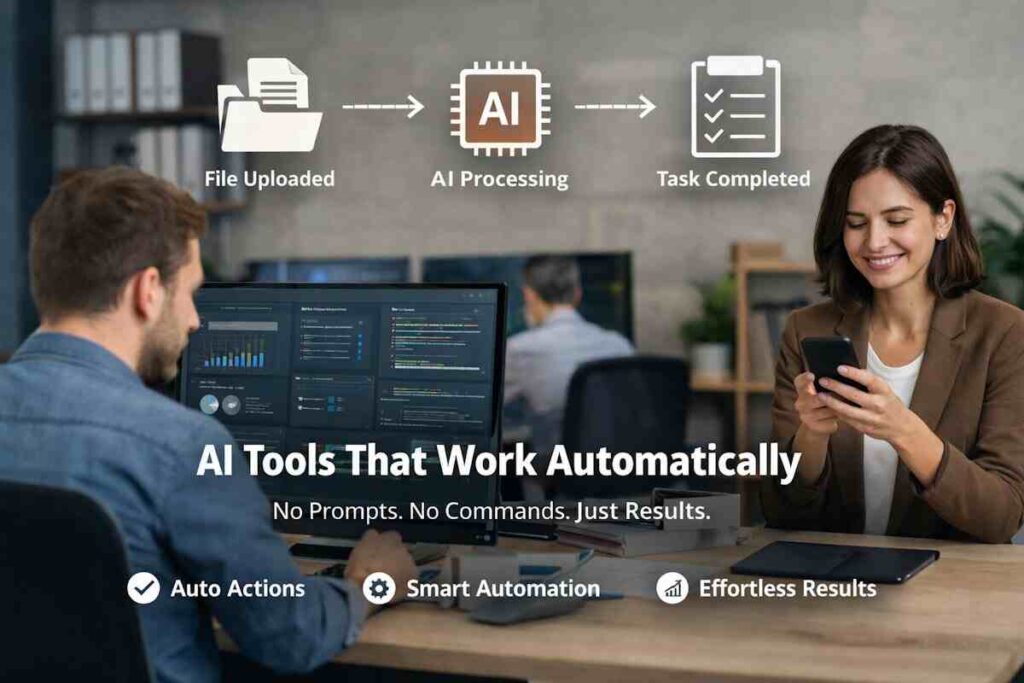
Zero prompt tools are applications that make decisions, take actions, or offer output—without users needing to guide them with prompts.
Instead of typing, “Summarize this document in 3 bullet points,” a tool already knows to do that every time you upload a file. Instead of saying, “Create a follow-up email based on this message,” your tool just does it. Automatically.
These tools are built on machine learning models, sure, but the real value comes from how the product is designed. It’s about using AI quietly in the background. No back-and-forth chats. Just action.
Why More Businesses Want This
People don’t want to babysit apps. They don’t want to figure out how to talk to AI or learn special commands. They want tools that work like a well-trained assistant—doing the job without needing direction.
Companies building internal tools or customer-facing products are realizing that smart automation can:
- Cut down time spent on manual tasks
- Remove friction from workflows
- Improve consistency in output
- Free up employees for higher-value work
And users? They love tools that “just work.”
If you’re thinking about making your product smarter, this is where an AI development service can step in and actually get you from idea to execution.
What an AI App Development Company Actually Does
Let’s clear something up. You don’t need a room full of PhDs to build an AI-driven tool. You need a team that gets your goals, understands the data, and can build something functional, not flashy.
A good AI app development company will help with:
- Understanding your use case: They’ll talk through your business process, user flow, or idea to figure out where AI can actually help—not just where it sounds cool.
- Choosing the right models: There are a ton of AI models out there. Some are open-source. Some are paid. Some are fast, others are accurate. Picking the right one for your app is key.
- Data strategy: If you have your own data (customer support tickets, purchase history, emails, etc.), they’ll help figure out how to use it to train or fine-tune a system that works for your users.
- Workflow automation: This is where things start coming together. The team builds the logic to trigger actions at the right time. No prompts. No waiting. Just a smart response to input.
- User interface and UX: The best AI tools don’t look like “AI tools.” They just feel intuitive. An experienced team will design a simple interface that hides the complexity and shows only what matters.
That’s the difference between hiring freelancers and working with a proper ai development service. The goal isn’t just to get AI working—it’s to make it invisible to the end user.
Where You Can Use Zero Prompt Tools
Wondering where zero prompt features actually make sense?
Here are a few examples across different industries:
Sales & Marketing
- Auto-generate lead summaries from CRM notes
- Suggest next-best actions for reps based on call data
- Score leads without asking reps to tag anything manually
HR & Recruiting
- Extract and match skills from resumes to job descriptions
- Schedule interviews automatically based on calendars
- Send personalized follow-up emails without templates
Customer Support
- Auto-classify incoming tickets and route them
- Suggest responses without prompting
- Summarize previous conversations when a new agent joins
Finance & Operations
- Flag unusual transactions
- Generate recurring reports from raw data
- Recommend budget adjustments based on trends
All of these can be designed as zero prompt features. The user just uses the tool. The tool handles the rest.
Why Prompt-Based Tools Are Falling Short
Look, prompt-based tools had their moment. Still do, in some places. But expecting users to become mini-prompt engineers isn’t scalable.
It adds friction. It leads to inconsistent results. It’s not how most people want to work.
If your product requires people to figure out how to talk to it every time, you’ve already lost some of them.
Instead, what’s working right now is automation that feels natural. People want to feel like the tool understands the context—without them spelling it out.
That’s the whole appeal of going zero prompt.
Building Your Team: In-House vs Outside Help
You might be thinking: should I try to build this in-house?
It’s a fair question. But here’s the reality.
To do this right, you’ll need people who know:
- Data engineering
- Machine learning
- App development
- UX design
- DevOps
- QA
Building that team takes time and budget. Most mid-size companies don’t have the resources to do it alone. That’s why many turn to an outside ai development service.
And when you want something done faster—or you need specific skills for a short time—using an AI Hiring Platform can be a smart move. These platforms let you pull in specialized talent without committing to long-term hires.
You can also hire AI developers directly, but make sure they’ve worked on actual production tools, not just prototypes or demos. You need builders, not just researchers.
What to Look for When You Hire AI Developers
If you’re going the hiring route, don’t get distracted by resumes full of fancy research or academic awards. That’s not what makes a great dev for this kind of work.
You want people who:
- Know how to ship working apps
- Understand performance and latency issues
- Can work with messy real-world data
- Communicate clearly with product and business teams
- Think in terms of product, not just code
You don’t want someone who only thinks about building a cool model. You want someone focused on solving a problem.
Whether you’re working to hire AI developers through an AI Hiring Platform or building a team internally, the goal is the same: build tools that work quietly and reliably in the background.
Final Thoughts: Build Smart, Not Flashy
Here’s the thing. Users don’t care how clever your AI is.
They care if the tool helps them get their job done. That’s it.
Building a zero prompt autonomous tool isn’t about showing off. It’s about solving a real problem in a way that feels natural and smooth.
That’s where a strong ai development service can make all the difference. They’ll help you skip the noise and build something that just works.
So if you’ve got a product idea or want to add smart features to what you already have, don’t wait to make it perfect. Start small. Test it out. Let users shape it with their feedback.
And build something that doesn’t need to be told what to do every single time.